
Flooring
Carpets for Discerning Surrey and South London Homes
The right carpet depends on fibre, construction and room use rather than looks alone. Wool offers the finest hand and resilience, wool blends add stain resistance without losing character, and modern synthetics suit high-traffic family areas at lower cost. Loop pile resists flattening in halls, while twist and velvet piles bring softness to bedrooms and living rooms.
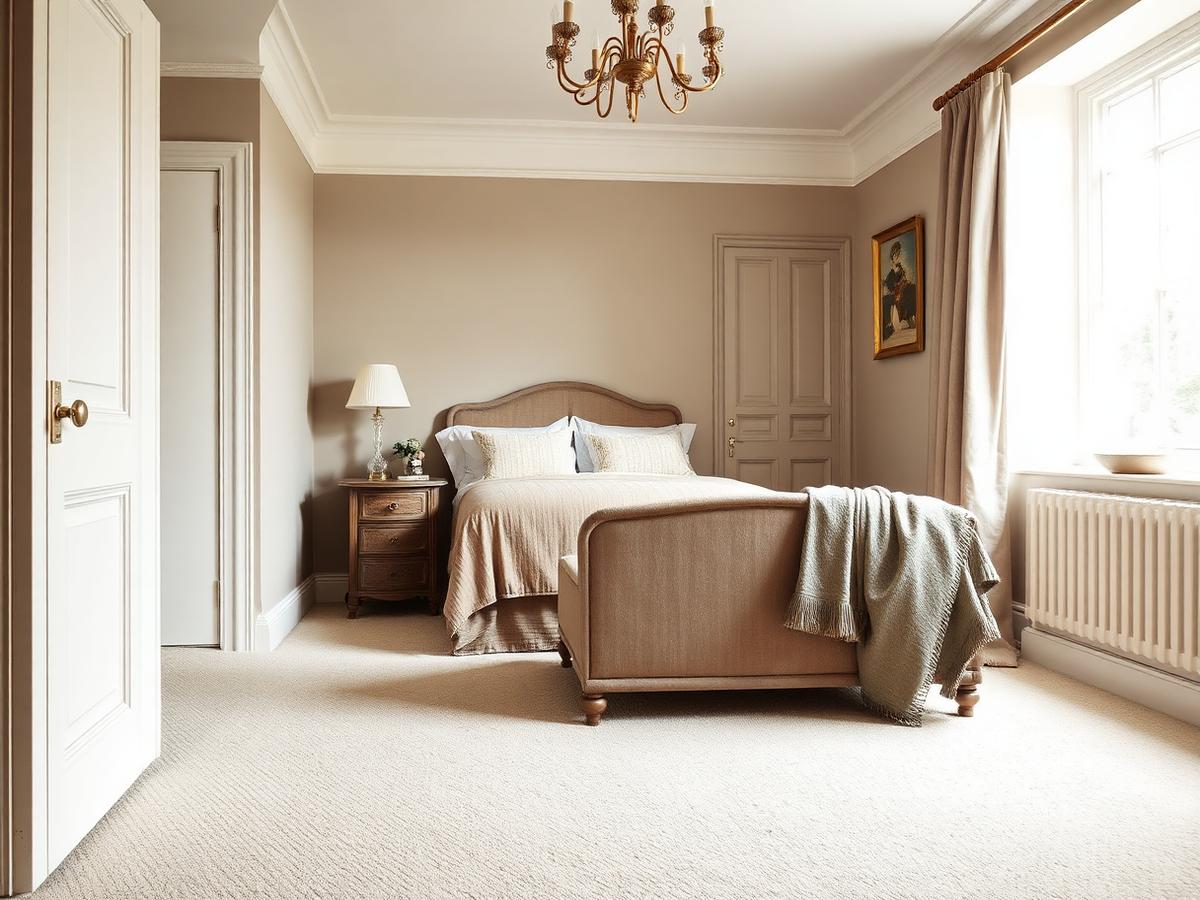
Choosing a carpet is a balance of fibre performance, construction and the character you want underfoot. We work through wool, wool-blend and synthetic options with you, matching pile type and colour to how each room in your home is actually used, then oversee accurate measuring, quality underlay and a fitted finish that sits flush to skirtings and thresholds.
Wool and wool-blend specialists
Genuine expertise in natural fibre performance, not just supply.
Pile matched to room use
Loop, twist, velvet and patterned constructions chosen for durability and feel.
Quality underlay as standard
Underlay specified to suit subfloor, footfall and acoustic needs.
Precise fitting
Accurate seams, pile direction and finishing for a tailored result.
Fibre choices: wool, wool blends and synthetics
Pure wool carpet remains the benchmark for a premium home. It has a natural resilience that allows pile to spring back after compression, a soft yet substantial handle, and a subtle depth of colour that synthetic fibres struggle to replicate. It is naturally flame-resistant and, with modern treatments, can offer good stain resistance, though wool is more porous than synthetic fibre and benefits from prompt attention to spills.
Wool-blend carpets, typically wool combined with nylon or another synthetic in proportions such as 80/20 or 50/50, retain much of wool's look and feel while gaining improved stain resistance and, in many cases, a lower price point. They are a sensible choice for busy family rooms and staircases where wool's softness is wanted but a little extra practicality is useful.
Fully synthetic carpets, in nylon, polypropylene or polyester, have improved considerably in recent years. Solution-dyed nylon in particular offers strong stain and fade resistance and is well suited to playrooms, home offices and buy-to-let or guest accommodation where resilience matters more than natural fibre character.
Pile construction: loop, twist, velvet and patterned
Loop pile carpets, where the yarn forms unbroken loops, are hardwearing and resist flattening, making them a strong choice for hallways, stairs and landings. Berber-style loops in particular hide footprints and vacuum marks well.
Twist pile carpets have yarn twisted and heat-set into a slightly textured finish that also disguises footmarks and everyday wear, making them a popular all-rounder for living rooms and bedrooms.
Velvet pile offers a smooth, luxurious finish with a subtle sheen, ideal for formal living rooms and bedrooms where footfall is lighter, though it will show footprints and vacuum lines more readily.
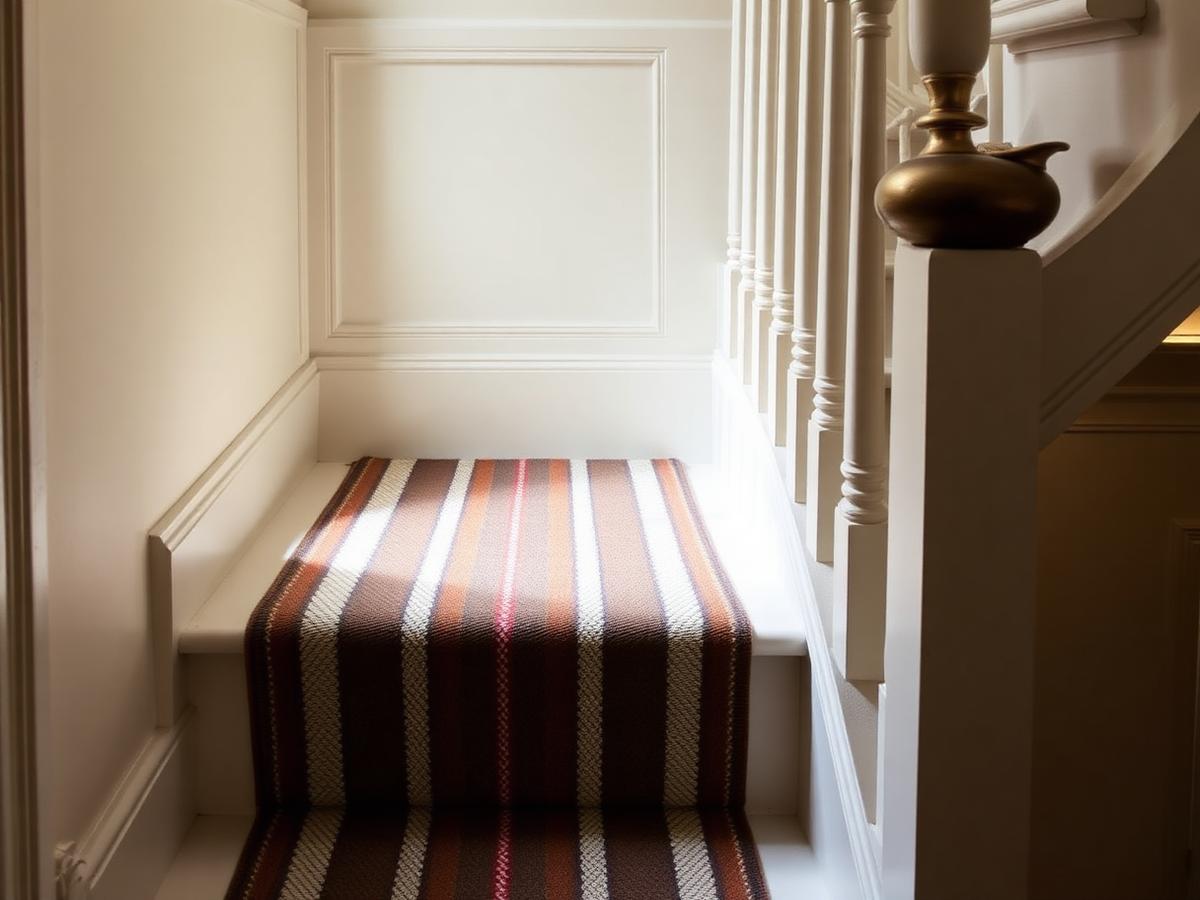
Patterned and striped carpets, whether Wilton-woven or printed, add architectural interest to a hallway or staircase and are particularly effective at concealing everyday soiling between cleans.
- Loop pile: hallways, stairs, high-traffic areas
- Twist pile: living rooms, bedrooms, general use
- Velvet pile: formal rooms, lower footfall
- Patterned or striped: stairs, hallways, statement rooms
Durability, stain performance and moth resistance
Durability is governed as much by density and twist level as by fibre type; a densely tufted, well-twisted carpet will generally outperform a looser, cheaper construction in the same fibre. We advise on weight and construction specifications suited to each room's footfall rather than judging by price alone.
Stain performance varies by fibre and finish. Solution-dyed synthetics and treated wool blends resist everyday spills well, while pure wool rewards a swift blot-and-clean approach rather than aggressive scrubbing.
Wool is a natural material and can be vulnerable to moth larvae, particularly in undisturbed areas such as under furniture or in guest rooms used infrequently. Many wool and wool-blend carpets now include a moth-resistance treatment, which we can discuss and specify where it matters to you.
Underlay, pile direction and seams
Underlay affects comfort, insulation and the lifespan of the carpet above it as much as the carpet itself. We specify underlay by room use and subfloor type, balancing cushioning with the firmness needed to prevent excessive compression over time.
Pile direction matters both visually and practically: carpet laid with the pile running towards the main light source or the principal view through a room reads more evenly, and consistent direction across a run avoids visible shading at joins.
Wide-width carpets can often be laid in larger rooms with minimal or no seams, while narrower broadloom widths require careful seam placement, ideally away from focal points and high-wear paths, and finished so joins are as close to invisible as possible.
Room suitability
Bedrooms suit softer twist or velvet piles in wool or wool-blend fibres, where comfort underfoot matters more than heavy-duty resilience. Living rooms benefit from a similar approach, tempered by household footfall and pets.
Hallways, stairs and landings see the heaviest wear and are best served by loop pile, dense twist, or patterned Wilton constructions in wool-blend or performance synthetic fibres.
Home offices and playrooms, where chairs, toys and general activity create concentrated wear, are well matched to solution-dyed synthetic or robust wool-blend carpet.
Installation process
We measure precisely, accounting for pattern repeats, pile direction and room shape, then advise on the most efficient width and roll orientation to minimise seams and waste.
Fitting includes gripper rod, appropriate underlay, and careful trimming and finishing at doorways, thresholds and stair nosings, so the completed floor sits neatly against skirtings and adjoining surfaces.
| Type | Feel | Durability | Stain resistance | Best rooms |
|---|---|---|---|---|
| Wool | Soft, substantial | Very good | Good with prompt care | Living rooms, bedrooms |
| Wool blend | Soft with added resilience | Very good | Very good | Stairs, hallways, family rooms |
| Synthetic (solution-dyed) | Firm, practical | Good to very good | Excellent | Playrooms, offices, lets |
| Loop pile | Textured, firm | Excellent | Good | Hallways, stairs |
| Twist pile | Textured, comfortable | Very good | Good | Living rooms, bedrooms |
| Velvet pile | Smooth, luxurious | Moderate | Good | Formal rooms, low footfall |
Caring for your carpets
- Vacuum in the direction of the pile at least weekly, more often in high-traffic areas.
- Blot spills immediately with a clean cloth rather than rubbing, working from the outside in.
- Use a professional carpet cleaner periodically rather than relying solely on home spot treatments.
- Rotate furniture occasionally to even out pile compression in living areas.
- Use doormats and consider a shoes-off policy to reduce grit that accelerates wear.
- Address any moth-resistance treatment renewal in line with the manufacturer's guidance for wool carpets.
Frequently asked questions
- Is wool carpet worth the extra cost over synthetic?
- For most premium homes, yes. Wool offers a depth of colour, natural resilience and underfoot quality that synthetic fibres cannot fully match, and it ages well when cared for properly. Synthetic remains the more practical choice for very high-traffic or lower-priority areas where resistance to spills matters more than character.
- Which carpet is best for stairs?
- Stairs see concentrated wear at the nosing of each tread, so a dense, low-profile construction such as loop pile, twist pile or a Wilton-woven pattern in wool blend performs best. Deep velvet piles are best avoided on stairs as they crush and mark more visibly underfoot.
- Will wool carpet attract moths?
- Wool is a natural protein fibre that can attract moth larvae, particularly in undisturbed areas. Many wool and wool-blend carpets are now treated for moth resistance, and we can specify a treated option and advise on housekeeping habits that reduce risk further.
- How do I choose between loop, twist and velvet pile?
- Choose based on footfall and how the room is used. Loop pile suits hallways and stairs where durability matters most, twist pile suits general living areas balancing comfort and practicality, and velvet pile suits formal, lower-traffic rooms where a smooth finish is prized over resilience.
- Does carpet need a particular underlay?
- Yes. Underlay should be matched to the carpet type, room use and subfloor, as the wrong specification can shorten the life of an otherwise good-quality carpet. We select underlay for cushioning, insulation and support rather than treating it as an afterthought.
- Can patterned carpet be fitted without visible seams?
- Patterned carpet requires careful pattern matching at any seam, and wider rolls reduce the number of joins needed. With accurate measuring and experienced fitting, seams can be placed discreetly and matched closely enough that they are not a distraction in normal use.
- How often should carpet be professionally cleaned?
- Most households benefit from a professional deep clean roughly every twelve to eighteen months, more frequently in homes with pets or young children. Regular vacuuming and prompt spill treatment between cleans significantly extend the interval needed and preserve appearance.
Last reviewed 2026-08-04.
Other flooring collections
Consultation
Planning a flooring project?
Tell us about your property, ideas and timescale. We will help you explore the most suitable materials and arrange the next step.