
Our service
Floor Preparation
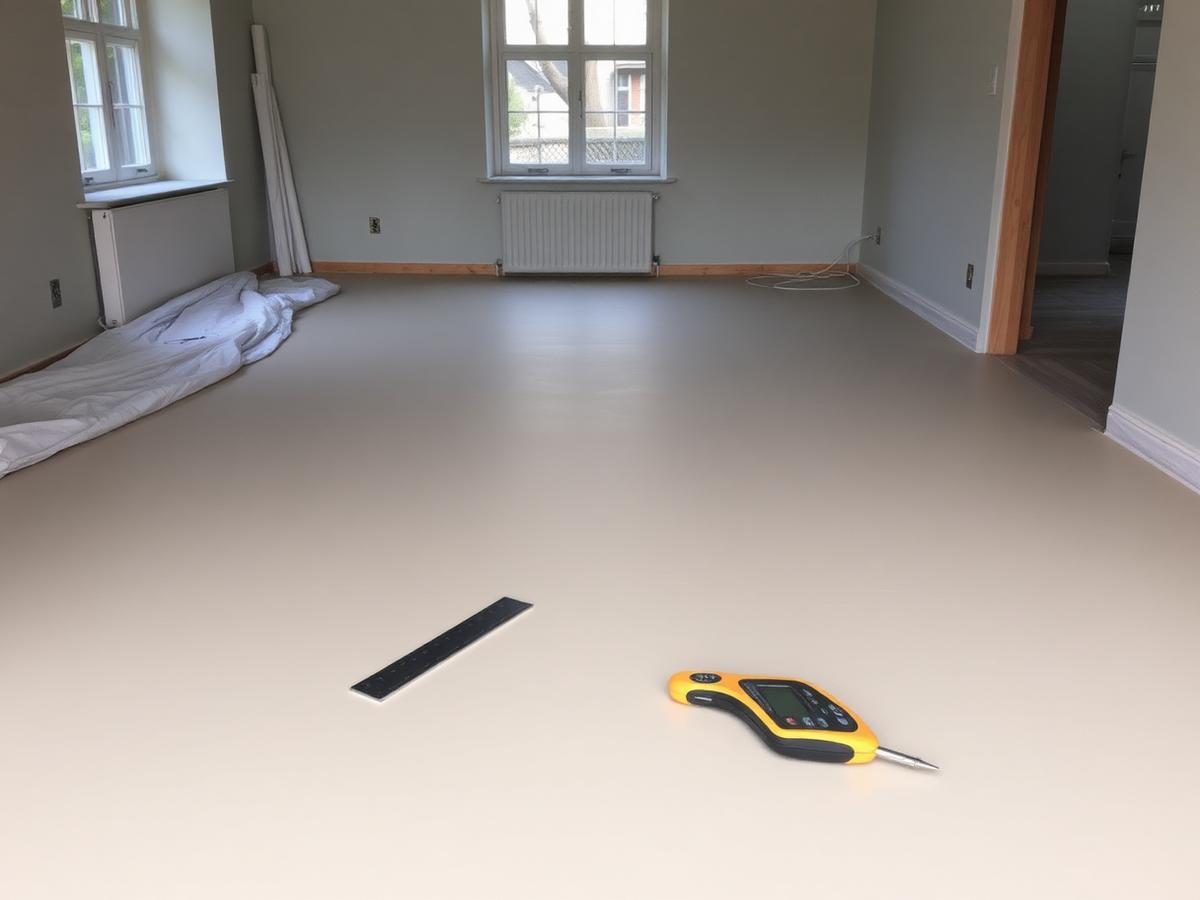
Floor preparation is the technical groundwork, moisture testing, subfloor assessment, smoothing and repairs, that determines whether a new floor lies flat, bonds securely and lasts. Most flooring failures trace back to inadequate preparation rather than the material itself, so we treat it as a distinct, carefully documented stage rather than an afterthought before installation.
- Step 1
Uplift and disposal
Existing flooring is carefully removed and responsibly disposed of, exposing the subfloor for proper inspection.
- Step 2
Subfloor assessment
We assess the subfloor for flatness, cracking, previous adhesive residue and general soundness before any further work begins.
- Step 3
Moisture testing
We carry out relative humidity testing using calibrated hygrometers, giving a reliable reading of the subfloor's moisture condition.
- Step 4
Damp-proofing where required
Where readings indicate elevated moisture, an appropriate damp-proof membrane or surface treatment is applied before proceeding.
- Step 5
Smoothing and repairs
Levelling compound, plywood overlay or localised repairs are used as needed to create a sound, flat, stable surface.
- Step 6
Drying and sign-off
We allow the correct drying time for any wet-applied products before confirming the subfloor is ready for installation.
Why does preparation matter more than people expect?
A new floor can only ever be as good as the surface beneath it. Unevenness telegraphs through thin materials such as LVT, trapped moisture can cause adhesive failure, cupping or mould under wood and carpet alike, and old adhesive residue can prevent a new floor bonding correctly. Preparation is where the long-term success of the floor is actually decided, well before the visible finish is laid.
What is relative humidity testing and why does it matter?
Relative humidity, or RH, testing measures the moisture condition inside a concrete subfloor, expressed as a percentage. In plain terms, a calibrated hygrometer probe is inserted into the slab and left to equilibrate, and the reading tells us whether the subfloor is dry enough for the chosen flooring and adhesive system. Many wood and adhesive manufacturers specify a maximum RH percentage before their products can be warranted, so this is not a precaution we take lightly, it is often a condition of the flooring's own guarantee.
Readings that come back too high do not mean a floor cannot proceed, but they do mean either further drying time or a suitable damp-proof membrane is needed before installation, and we explain the implications of each option clearly.
How do you assess whether a subfloor is sound?
Once existing coverings are uplifted, we inspect the subfloor for cracking, hollow-sounding areas, general flatness and any residue from previous adhesives. Timber subfloors are checked for movement, deflection and secure fixing, while concrete slabs are checked for level and surface integrity. This assessment determines whether smoothing compound, plywood overlay or localised structural repair is the right route.
- Visual and physical inspection for cracking and hollow spots
- Flatness checked against manufacturer tolerances
- Identification of old adhesive or residue requiring removal
- Assessment of timber subfloor movement and fixing
What is the difference between smoothing compound and plywood overlay?
Smoothing compound, or self-levelling screed, is a pourable cementitious product used mainly on concrete subfloors to correct minor unevenness and create a flat surface for adhesion. Plywood overlay is typically used over timber subfloors, or where a floating floor system needs a stable, uniform base, and works by bridging small movements in the boards beneath rather than being a liquid-applied fix. The right choice depends on subfloor type, the flooring being installed, and the extent of unevenness found.
How long does preparation take, including drying time?
This varies considerably depending on what is found. Uplift and assessment can often be done in a day for a typical room, but smoothing compound needs proper curing time, generally at least a day and often longer depending on depth and ambient conditions, and any damp-proof membrane or additional drying required for elevated moisture readings can extend the programme by several days. We build realistic drying times into the overall project schedule rather than rushing this stage, since doing so risks the entire installation.
Why does adhesive compatibility matter?
Not every adhesive suits every combination of subfloor and flooring material, and using the wrong one can lead to poor bonding, staining through the finished surface, or failure under underfloor heating. We select adhesives based on subfloor moisture condition, flooring type and, where relevant, underfloor heating specification, in line with manufacturer requirements, rather than defaulting to a single product for every job.
Frequently asked questions
- What does a hygrometer reading actually tell me?
- It tells us the relative humidity level within the subfloor, expressed as a percentage, which indicates how much moisture is present and whether it is within the safe limits set by flooring and adhesive manufacturers before installation can proceed.
- What happens if my subfloor fails the moisture test?
- It means further drying time or a damp-proof membrane is required before installation, and we will explain the practical options and realistic timescales clearly rather than proceeding against the reading.
- Can preparation be done on the same day as installation?
- For straightforward subfloors with no moisture concerns, some preparation and installation can be scheduled close together, but where levelling compound or damp-proofing is needed, proper drying time must be allowed first.
- Will removing my old flooring damage the subfloor?
- Uplift is carried out carefully, but old adhesive residue or damage from a previous poor installation can sometimes be uncovered; this is exactly why assessment happens after uplift, so any issues are identified and addressed properly.
- Do older or period properties need different preparation?
- Often, yes. Suspended timber subfloors, uneven historic floors and solid floors without a modern damp-proof course are all more common in older properties, and each needs its own assessment rather than a standard approach.
Last reviewed 2026-08-04.
Consultation
Planning a flooring project?
Tell us about your property, ideas and timescale. We will help you explore the most suitable materials and arrange the next step.