
Flooring
Luxury Vinyl Tile Flooring for Kitchens, Utility and Living Spaces
Luxury vinyl tile, or LVT, replicates the appearance of wood or stone in a durable, water-resistant format available as planks, tiles or herringbone-effect layouts, fitted either gluedown or as a click system. Gluedown gives the most stable, premium result and suits larger or heated areas, while click systems suit smaller rooms and situations where future removal may be needed.
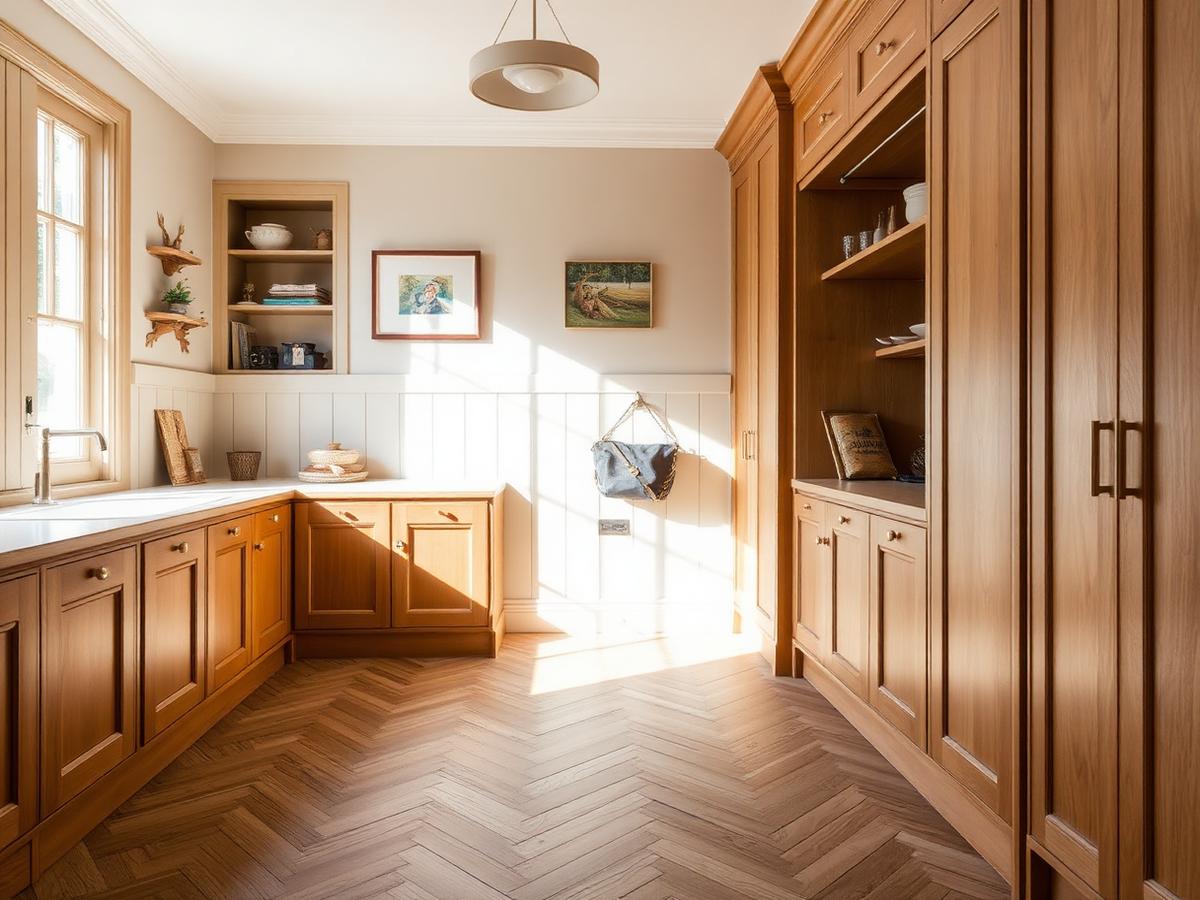
Luxury vinyl tile has matured into a genuinely premium option for kitchens, utility rooms and busy family areas, combining realistic wood or stone visuals with water resistance and comfort underfoot. We advise on gluedown versus click installation, floor preparation, and layout, including herringbone, so the finished floor performs as well as it looks.
Water and wear resistant
Well suited to kitchens, utility rooms and busy family areas.
Herringbone and plank layouts
Realistic wood and stone visuals in a range of formats.
Correct floor preparation
Smoothing compounds and damp-proof membranes specified where needed.
Underfloor heating compatible
Most LVT performs well over underfloor heating when correctly specified.
Plank, tile and herringbone formats
LVT is available as long planks replicating timber boards, square or rectangular tiles replicating stone or ceramic, and individual parquet-style pieces that can be laid in herringbone or chevron patterns for a more elaborate, tailored look.
Herringbone LVT has become particularly popular as a way to achieve the visual richness of a parquet floor with the water resistance and easier maintenance of vinyl, and it suits kitchens and hallways especially well.
Gluedown versus click installation
Gluedown LVT is bonded fully to the subfloor with adhesive, giving the most stable, solid underfoot feel and the best performance in larger rooms, over underfloor heating, and in kitchens where appliances and heavy furniture sit on the floor.
Click LVT locks together in a floating floor over an underlay, without adhesive, which makes it faster to fit and easier to lift later, but generally gives a slightly less substantial underfoot feel and is better suited to smaller rooms or where future removal is a priority.
Floor preparation, smoothing compounds and damp-proof membranes
LVT is unforgiving of an uneven subfloor, as imperfections beneath a thin, tightly bonded material can telegraph through the surface over time, so we assess the subfloor and apply a smoothing compound where needed to achieve a flat, stable base.
On solid floors, particularly older concrete or where damp readings are a concern, a damp-proof membrane may be applied before installation to protect the LVT and its adhesive from moisture rising through the slab.
- Subfloor assessment and moisture testing
- Smoothing compound applied to level minor imperfections
- Damp-proof membrane where moisture risk is identified
- Removal of old coverings and adhesive residue as required
Feature strips, borders and layout
Feature strips in a contrasting colour or material can be used to define zones within an open-plan space, mark a threshold between rooms, or frame a kitchen island, and are planned into the layout before installation begins.
Layout direction and starting point are considered carefully in relation to the room's proportions and principal sightlines, particularly for herringbone patterns, where the point of entry into the pattern affects the overall visual balance.
Durability, underfloor heating and suitability
Good-quality LVT with an adequate wear layer withstands the daily traffic, spills and occasional impact typical of kitchens and utility rooms, and its water resistance makes it a sound choice where timber would be more vulnerable.
Most LVT performs well over underfloor heating, provided the product and adhesive are rated for it and temperature changes are introduced gradually rather than abruptly.
LVT suits kitchens, utility rooms, boot rooms, home offices and busy hallways particularly well; in principal reception rooms it is a matter of preference between the authenticity of real timber and the practicality of vinyl.
| Factor | Gluedown | Click |
|---|---|---|
| Underfoot feel | Solid, substantial | Slightly more give |
| Best suited to | Large rooms, kitchens, underfloor heating | Smaller rooms, rental or flexible spaces |
| Installation time | Longer, requires adhesive curing | Faster to fit |
| Future removal | More involved | Straightforward |
| Subfloor tolerance | Requires very flat, prepared subfloor | Slightly more forgiving with underlay |
Caring for your luxury vinyl tile
- Sweep or vacuum regularly to remove grit that can dull the surface finish.
- Wipe spills promptly, particularly on textured or embossed finishes.
- Use a manufacturer-recommended cleaner rather than abrasive or wax-based products.
- Use furniture protector pads to prevent indentation from heavy items.
- Avoid dragging heavy appliances across the floor to prevent surface scuffing.
Frequently asked questions
- Is LVT suitable for kitchens?
- Yes, LVT is one of the most practical choices for kitchens, being water-resistant, durable and comfortable underfoot compared with harder surfaces such as stone or ceramic tile. Gluedown installation is generally preferred in kitchens for its stability under heavy appliances and furniture.
- Should I choose gluedown or click LVT?
- Gluedown gives a more solid, premium underfoot feel and is preferable for larger rooms, kitchens and underfloor heating, while click is quicker to fit, slightly more forgiving of the subfloor, and easier to remove later, suiting smaller rooms or flexible spaces.
- Can LVT be laid in a herringbone pattern?
- Yes, herringbone LVT is increasingly popular for achieving the visual richness of parquet flooring with the practicality and water resistance of vinyl. It requires careful layout planning around the room's sightlines to look its best.
- Does the subfloor need special preparation for LVT?
- Yes. LVT is thin and tightly bonded, so an uneven subfloor can show through the surface over time. We use a smoothing compound to level imperfections and, where moisture is a concern, a damp-proof membrane before installation.
- Is LVT suitable for underfloor heating?
- Most LVT performs well over underfloor heating provided the product and adhesive are rated for it and the system's temperature is adjusted gradually rather than switched on abruptly. We confirm compatibility as part of specifying the floor.
- How does LVT compare to real wood flooring?
- LVT offers greater water resistance and lower maintenance than real wood, making it well suited to kitchens and utility rooms, while engineered or solid wood offers a natural material and tactile quality that vinyl, however realistic, does not fully replicate.
- How long does LVT last?
- A good-quality LVT with an adequate wear layer, properly installed on a well-prepared subfloor, can perform well for many years of everyday family use, though its lifespan depends on the specific product, installation method and household wear.
Last reviewed 2026-08-04.
Other flooring collections
Consultation
Planning a flooring project?
Tell us about your property, ideas and timescale. We will help you explore the most suitable materials and arrange the next step.