
Carpet
Wool carpet: benefits, drawbacks and where it works best
Wool carpet offers natural resilience, a soft yet supportive feel underfoot and a depth of colour that synthetic fibres struggle to match, making it well suited to bedrooms and living rooms. Its main drawbacks are a higher price point, vulnerability to certain stains and the need for slightly more careful cleaning than synthetic alternatives.
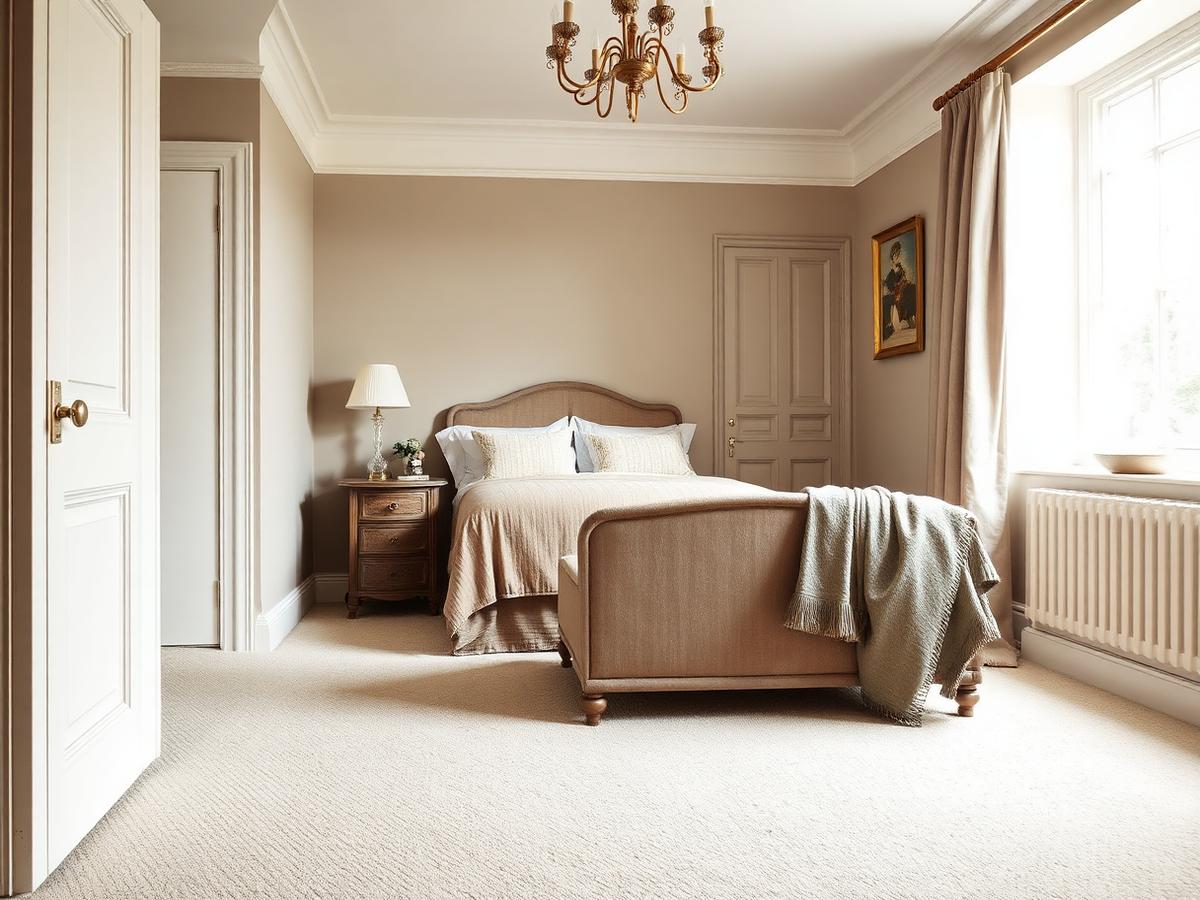
Why wool remains the benchmark natural fibre
Wool has been used in carpet manufacture for centuries, and it remains the reference point against which other fibres are measured for good reason. Its natural crimp gives pile fibres a springiness that helps a carpet resist crushing and recover its appearance between cleans, even in areas with regular footfall.
It also takes dye particularly well, producing the kind of rich, layered colour that is difficult to replicate synthetically, and it has a naturally soft handle underfoot that many people find more comfortable than synthetic alternatives.
Where wool genuinely performs well
Wool suits bedrooms, living rooms, dining rooms and landings particularly well, where its comfort and appearance are assets and where the traffic, while regular, is not extreme. Blended wool carpets, typically combining wool with a small proportion of synthetic fibre, are often specified on stairs for the extra durability the blend provides while retaining much of wool's natural character.
The genuine drawbacks
Wool is not without its limitations, and it is worth being clear-eyed about them.
- Cost — wool carpet typically sits at a higher price point than synthetic alternatives, reflecting the fibre and manufacturing involved
- Staining — wool absorbs liquid readily, so spills need attention promptly; certain acidic substances can affect colour if left
- Shedding — new wool carpet often sheds loose fibres for the first few weeks, which is normal and settles with regular vacuuming
- Moisture sensitivity — wool is not suited to consistently damp environments and should be avoided in bathrooms and similarly exposed areas
Wool versus wool-blend for practical rooms
For stairs, hallways and family rooms where durability is the primary concern, a wool-rich blend (commonly wool with a synthetic fibre such as nylon) is often a sensible middle ground. It retains much of wool's look and feel while gaining resistance to wear and, in some cases, improved stain resistance from the synthetic component.
Caring for wool carpet day to day
Wool responds well to regular, gentle vacuuming and prompt attention to spills, blotting rather than rubbing to avoid pushing liquid deeper into the pile. Professional cleaning at sensible intervals, using products suited to wool, helps maintain both appearance and lifespan, though exact intervals depend on the household and level of use.
What affects the final cost
Pile weight, construction (woven versus tufted), pattern and the proportion of wool in a blend all influence price. Rather than comparing carpets on price per square metre alone, it is worth asking what pile weight and construction sit behind that figure, since these have a direct bearing on how the carpet performs over time.
Frequently asked questions
- Is wool carpet suitable for homes with pets?
- Wool can work well in homes with pets, particularly as a durable wool-rich blend on stairs and family areas, since its natural fibre structure resists matting and holds its appearance. It is not inherently stain-proof, so accidents still need prompt attention, and a darker or patterned carpet can help disguise everyday marks between cleans.
- Does wool carpet fade in sunlight?
- All carpet fibres can fade with prolonged, direct sunlight exposure, and wool is no exception, though good quality dyeing generally gives reasonable colour stability. Rooms with large south-facing windows may benefit from blinds or UV-filtering glazing to protect the carpet's appearance over the years, alongside occasionally rotating furniture to even out exposure.
- How long does wool carpet typically last?
- Lifespan depends heavily on pile weight, construction, traffic levels and care, so it is not possible to give a single figure that applies to every home. As a general principle, a well-specified wool carpet in a moderately used room, properly maintained, tends to outlast a comparable budget synthetic carpet, but the specifics should be discussed for your particular room.
Written by The Floor & Form studio team, reviewed by Floor & Form installation team. Published 2026-08-04, last updated 2026-08-04.
More on carpet
Notable luxury carpet brands in the UK
A forthcoming overview of the kind of luxury carpet brands and manufacturers worth considering for a high-end home.
Wool versus polypropylene carpet
A forthcoming comparison of wool and polypropylene carpet across cost, durability, stain resistance and feel.
Loop pile versus twist pile carpet
A forthcoming explanation of loop and twist pile carpet construction and which suits which rooms.
Consultation
Planning a flooring project?
Tell us about your property, ideas and timescale. We will help you explore the most suitable materials and arrange the next step.