
Design
The complete guide to choosing flooring for a high-end home
The best flooring for a high-end home matches material to how each room is actually used: engineered wood or natural stone-look LVT for main living areas, wool carpet for bedrooms and quiet rooms, and a durable runner or wool twist for stairs and hallways, all chosen for long-term wear rather than appearance alone.
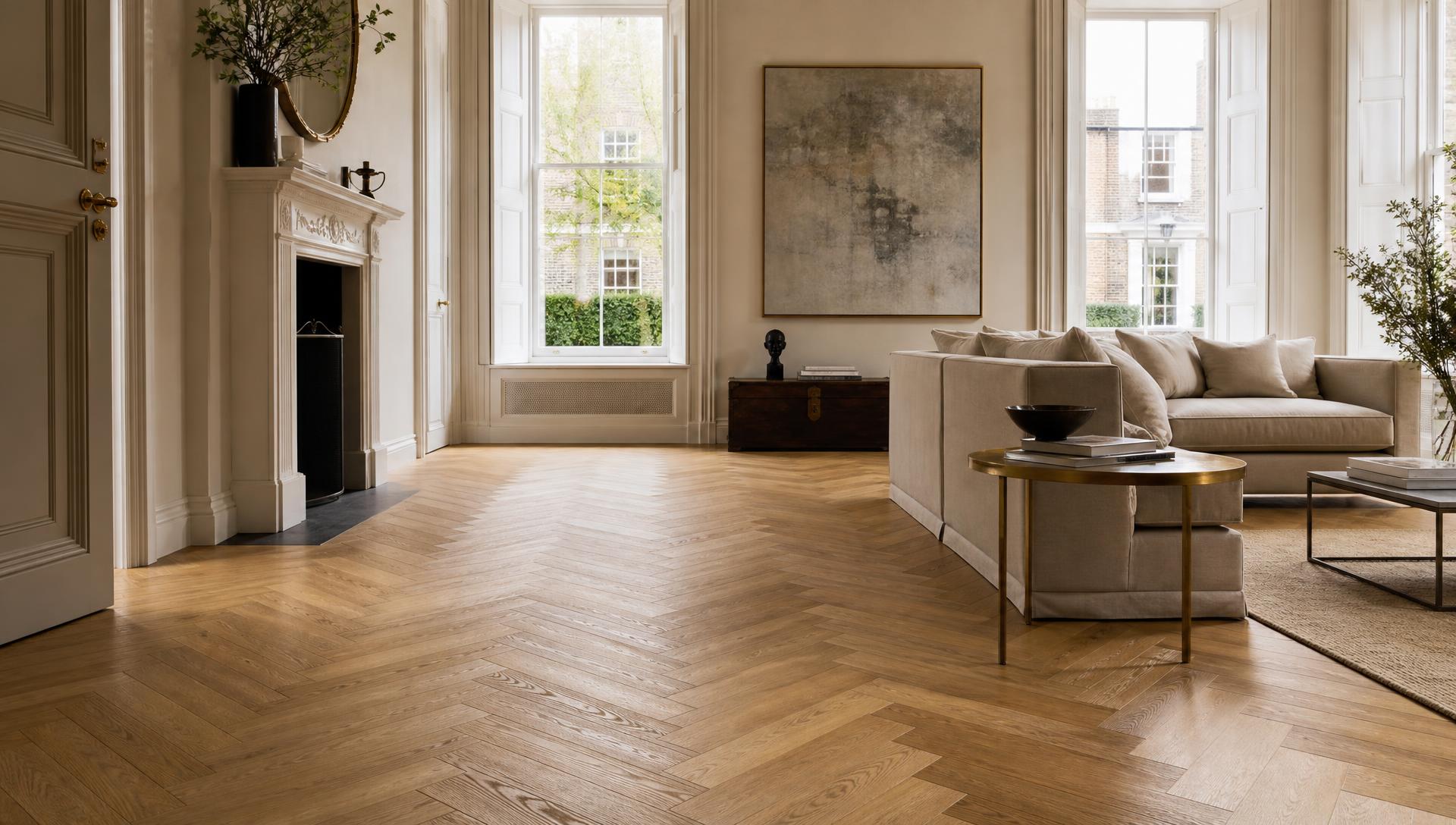
Start with how the house is lived in, not how it looks in a brochure
The flooring choices that age best in substantial homes are rarely the ones chosen for visual impact alone. Before any material is shortlisted, it is worth mapping out how each room is genuinely used: which spaces see daily footfall from family and pets, which are used only occasionally, and which need to feel warm and hushed underfoot.
A formal dining room used a handful of times a month can carry a more delicate natural fibre than a boot room or kitchen-diner that absorbs the bulk of daily life. Getting this mapping right at the outset avoids costly mismatches later, where a beautiful floor wears out far sooner than it should.
Matching material to zone
In our experience, larger homes tend to divide naturally into three zones, each suited to a different type of flooring.
- Formal and quiet rooms — wool carpet or natural flooring, prioritising comfort and acoustics over hard wear
- High-traffic living spaces — engineered wood or a premium LVT, chosen for durability and ease of cleaning
- Stairs, landings and hallways — a hardwearing wool twist or a bespoke runner over wood, since these areas see the most concentrated wear in any home
Engineered wood as the backbone of the ground floor
For open-plan kitchens, living rooms and hallways, engineered wood is a common and sensible choice in the properties we work on. It offers the character of a genuine timber surface with better dimensional stability than solid wood, which matters in homes with underfloor heating or wide, uninterrupted rooms.
The board width, wood species and finish all affect how a room feels — wider boards and a matt, low-sheen finish tend to suit contemporary and period homes alike, while a herringbone or chevron lay adds a more formal, tailored character to a hallway or drawing room.
Where LVT earns its place
Luxury vinyl tile is often overlooked in high-end projects, but the better ranges are genuinely convincing and bring practical advantages in bathrooms, boot rooms, home gyms and busy family kitchens, where moisture, underfloor heating and heavy use rule out solid timber.
The key is choosing a considered product with realistic texture and bevel detail, and having it laid by an experienced fitter, since a poor installation is what gives LVT its reputation, not the material itself.
Carpet for comfort, quiet and character
Bedrooms, snugs and media rooms benefit from the warmth, comfort and sound-deadening qualities that only carpet provides. Wool is the natural choice in this context for its resilience and the way it takes colour, though it does come with specific care and budget considerations discussed further in our dedicated wool carpet guide.
Getting the specification right before ordering
A high-end result depends as much on preparation, subfloor condition and fitting standard as it does on the material chosen. We always recommend a proper site survey, moisture testing where relevant, and an honest conversation about wastage for pattern-matched or herringbone layouts before any order is placed.
A practical way to shortlist
Rather than choosing flooring room by room in isolation, it helps to select two or three materials for the whole house first — for instance, an engineered wood, a wool carpet and an LVT — and then decide where each is used. This keeps the finished home feeling coherent rather than a patchwork of unrelated choices.
| Room type | Common choice | Why |
|---|---|---|
| Kitchen / open-plan living | Engineered wood or premium LVT | Durability, ease of cleaning, underfloor heating compatibility |
| Bedrooms | Wool carpet | Comfort, warmth and acoustic benefit |
| Stairs and landings | Wool twist or bespoke runner | Concentrated wear needs a resilient, well-fitted surface |
| Bathrooms / boot rooms | LVT or natural stone-look LVT | Moisture resistance and practicality |
| Formal reception rooms | Natural flooring or fine wool carpet | Character and quiet underfoot, lower daily traffic |
Frequently asked questions
- Should the same flooring run through the whole ground floor?
- Not necessarily. A single consistent material through open-plan living areas usually reads well and avoids visual breaks, but it is entirely reasonable to change material at a doorway into a boot room, bathroom or snug where practical needs differ. What matters is a deliberate transition, ideally aligned with a threshold or change of use, rather than an arbitrary stopping point.
- Is it worth paying more for a wider engineered wood board?
- Wider boards generally show off the timber's grain and character more fully and can suit larger rooms well, but the right width depends on the room's proportions and the look you want. It is a genuine cost and character trade-off rather than simply a mark of quality, so it is worth seeing samples at scale before deciding.
- How far in advance should flooring be chosen in a renovation?
- Flooring is best specified early, ideally alongside kitchen and joinery decisions, since thresholds, underfloor heating design and door undercuts all depend on the finished floor build-up. Leaving it until late in a project often forces compromises that could have been avoided with earlier planning.
Written by The Floor & Form studio team, reviewed by Floor & Form installation team. Published 2026-08-04, last updated 2026-08-04.
More on design
Herringbone LVT versus herringbone wood
A forthcoming comparison of herringbone-laid LVT and engineered wood, covering appearance, cost, wastage and where each performs best.
Choosing flooring for a period property
A forthcoming guide to selecting flooring that respects a period property's character while meeting modern practical needs.
Coordinating flooring across an open-plan home
A forthcoming guide to keeping flooring visually coherent across open-plan kitchens, living and dining spaces.
Consultation
Planning a flooring project?
Tell us about your property, ideas and timescale. We will help you explore the most suitable materials and arrange the next step.