
Stairs
How to choose carpet for stairs, landings and hallways
Stairs, landings and hallways see more concentrated wear than any other part of a home, so carpet here should prioritise a dense, low pile construction and a durable fibre such as a wool-rich blend or solution-dyed nylon, in a colour and pattern that disguises everyday marks rather than showing every trace of use.
Why these areas wear differently
Every journey through a home crosses its stairs and hallways, often several times a day, and the twisting motion of feet turning on a stair tread creates a different kind of wear to the more even pressure seen in a living room. This is why a carpet perfectly suited to a bedroom can wear prematurely if used on a staircase.
Construction matters more than appearance
A dense, tightly constructed pile resists crushing and matting far better than a deep, loose pile, even if the latter looks more luxurious in a showroom. For stairs in particular, a shorter, dense pile also reduces the risk of the carpet catching or lifting at the nosing, which can become a trip hazard over time.
- Twist pile — a hardwearing, textured construction that resists flattening, well suited to stairs and hallways
- Berber loop — durable and low-profile, though a snag can run further in a loop construction than a cut pile
- Saxony or plush pile — comfortable underfoot but generally better suited to lower-traffic bedrooms than stairs
Fibre choice for stairs and hallways
Wool-rich blends are a popular choice for stairs because they combine wool's natural resilience and appearance with the added durability of a synthetic fibre, typically nylon. Solution-dyed synthetic carpets are another strong option, particularly where stain resistance and colourfastness under sunlight are a priority, such as a hallway with a glazed front door.
Colour and pattern strategy
Mid-tone, flecked or subtly patterned carpets tend to disguise the dust, fluff and minor marking that inevitably accumulate in high-traffic areas far better than plain, pale carpets. This is less about hiding poor maintenance and more about practical, sensible specification for the busiest parts of the home.
Fitting considerations specific to stairs
Stair carpet is one of the more technically demanding fitting jobs in flooring, requiring accurate tensioning, correct grippers and careful attention at the nosing of each tread. A well-fitted stair carpet should sit flat and taut with no visible seams at the nosing, and this is an area where fitting skill has a direct, visible impact on both appearance and safety.
Runners as an alternative
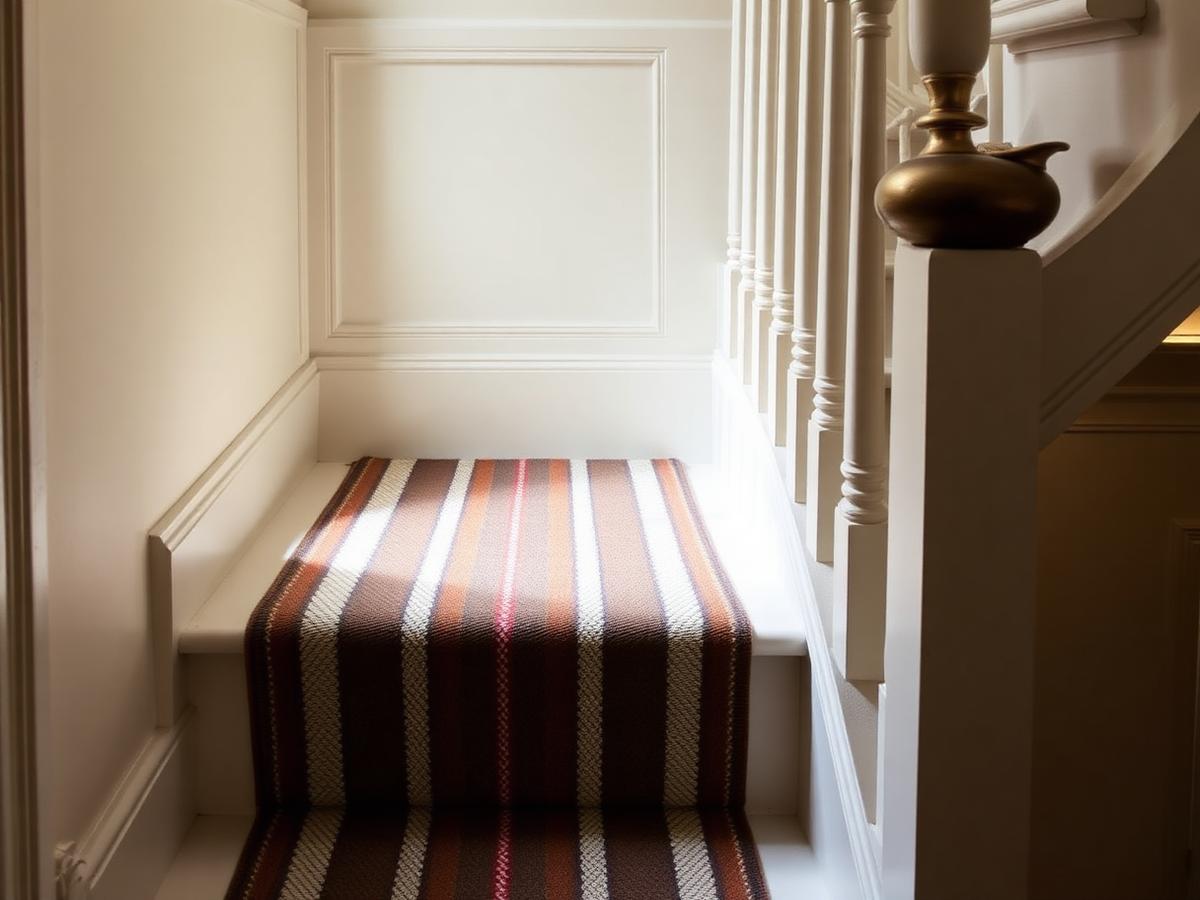
Where the stair itself is an attractive timber feature, or where a more tailored, architectural look is wanted, a bespoke stair runner leaving painted or stained timber exposed at the edges is a strong alternative to full-width stair carpet. This is covered in detail in our dedicated guide to bespoke stair runners.
Frequently asked questions
- What is the best carpet for a high-traffic staircase?
- For a high-traffic staircase, a dense, low-profile construction such as a twist pile in a wool-rich blend or solution-dyed nylon generally performs best, since it resists crushing and matting far better than a deep or loose pile. A mid-tone or subtly patterned colourway also helps disguise everyday marking between cleans.
- Should hallway carpet match the stairs?
- It is common and generally advisable to run the same carpet through stairs, landing and connecting hallway, since these areas function as a single continuous journey through the home and matching flooring reads as considered rather than patchwork. Where a hallway also needs to withstand external dirt, some households choose a closely related but slightly more robust carpet instead.
- How often should stair carpet be replaced?
- There is no fixed interval, since it depends on the carpet's construction, fibre, household size and how it has been maintained. Visible flattening of the pile, fraying at the nosing or a noticeably worn path down the centre of each tread are practical signs that replacement, rather than cleaning, is the better option.
Written by The Floor & Form studio team, reviewed by Floor & Form installation team. Published 2026-08-04, last updated 2026-08-04.
Consultation
Planning a flooring project?
Tell us about your property, ideas and timescale. We will help you explore the most suitable materials and arrange the next step.