
Flooring
Laminate Flooring: Honest Advice for Premium Homes
Laminate flooring is a practical, cost-effective option built from a printed decorative layer over a high-density fibreboard core, and it can suit lower-priority areas such as home offices, guest bedrooms or rental accommodation. In principal living spaces and higher-specification homes, engineered wood or LVT generally offer better durability, repairability and long-term appearance, and we advise accordingly.
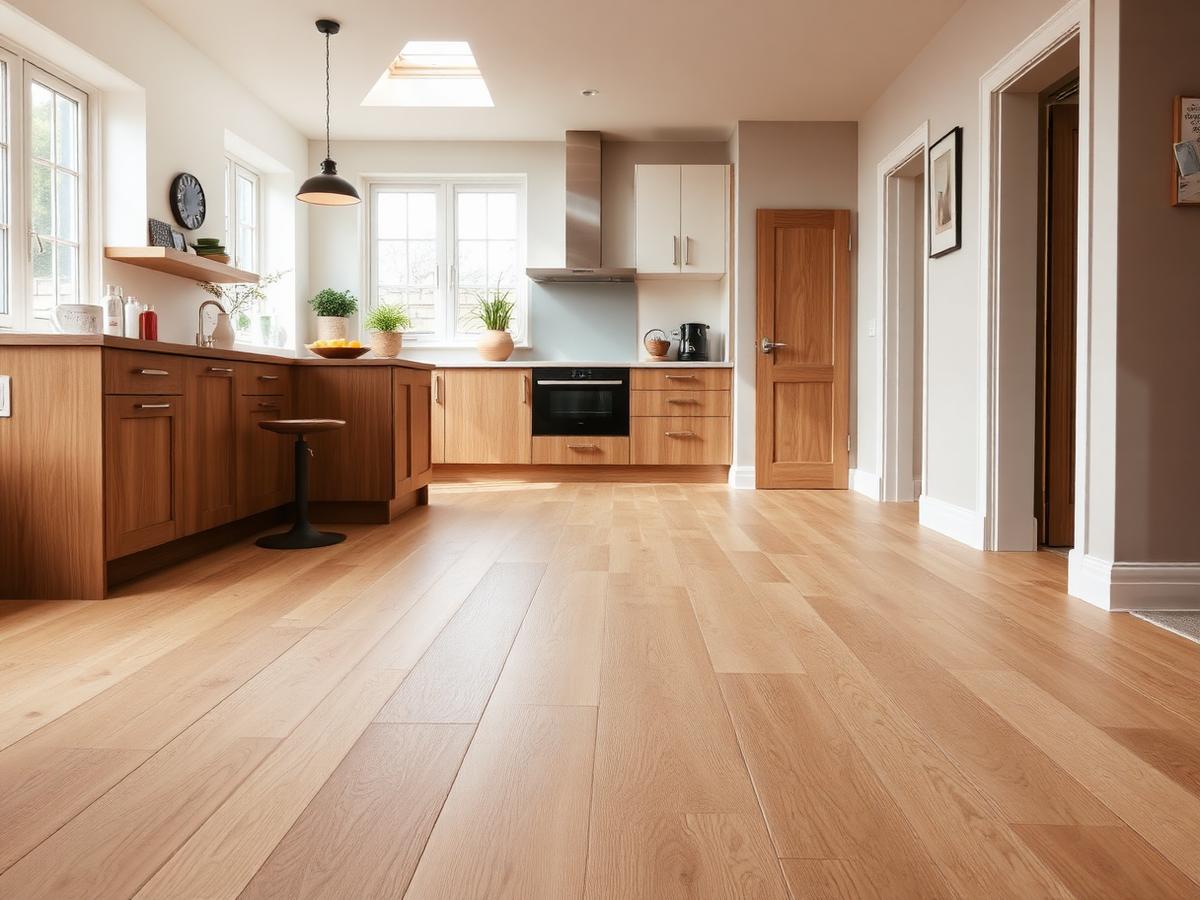
Laminate has a place in a well-considered home, though it is not the right choice everywhere, and we would rather advise honestly on that than oversell it. We talk through where laminate performs well, where engineered wood or LVT are better suited, and, where laminate is the right fit, help you choose a specification that performs as well as it can.
Honest advice
We tell you plainly where laminate is a sound choice and where it is not.
Cost-effective for the right rooms
A sensible option for lower-priority or transitional spaces.
Good moisture resistance ranges available
Certain laminate ranges suit kitchens and utility areas better than others.
Clear alternative recommendations
We suggest engineered wood or LVT where they will serve you better.
What laminate flooring is
Laminate flooring is manufactured from a high-density fibreboard core topped with a printed decorative layer, usually replicating wood or stone, and protected by a clear wear-resistant layer. It clicks together as a floating floor over an underlay, without adhesive, which makes it relatively quick to install.
Where laminate performs well
Laminate is a sensible choice for home offices, guest bedrooms, playrooms and rental or transitional accommodation, where budget and speed of installation matter more than the tactile authenticity of real timber or the water resistance of LVT.
Certain laminate ranges are manufactured with improved moisture resistance and can perform adequately in kitchens or utility rooms on a tighter budget, though this remains a compromise compared with LVT in genuinely wet-prone areas.
Where we would recommend against laminate in a premium home
In principal reception rooms, hallways and staircases in a higher-specification home, laminate's printed surface and comparatively thin wear layer generally show wear, scratching and moisture damage more readily than engineered wood or LVT, and it cannot be sanded or refinished when it does.
Laminate also has a less convincing underfoot feel and acoustic quality than engineered wood, something particularly noticeable in open-plan living spaces where flooring covers a large, continuous area and any hollow sound is more apparent.
Where budget allows, we would generally recommend engineered wood for warmth and authenticity, or LVT for water resistance and long-term durability, over laminate in any room that plays a significant part in how the home is experienced day to day.
Installation and technical considerations
Laminate is floated over an appropriate underlay, with an expansion gap left around the room's perimeter to allow for minor movement, and the subfloor should be reasonably flat and dry before installation to avoid the boards flexing or clicking apart over time.
Laminate is not recommended over underfloor heating in most cases beyond what specific ranges are rated for, and manufacturer guidance should be checked carefully before specifying it in a heated floor.
Making the right choice for your home
We would rather guide you towards the option that will serve your home well for years than sell you a floor that will need replacing sooner than expected. In many cases this means recommending engineered wood or LVT even where laminate was the initial assumption, and explaining clearly why.
| Factor | Laminate | LVT | Engineered wood |
|---|---|---|---|
| Water resistance | Limited, some ranges improved | Very good | Moderate, needs care |
| Underfoot feel | Hard, hollow-sounding | Solid, comfortable | Warm, natural |
| Repairability | Cannot be refinished | Individual planks can be replaced | Can be sanded and refinished |
| Underfloor heating | Limited compatibility | Generally suitable | Generally suitable |
| Best suited to | Lower-priority or transitional rooms | Kitchens, utility, family areas | Principal living spaces |
Caring for your laminate flooring
- Sweep or vacuum regularly to remove grit that can scratch the printed surface.
- Wipe spills promptly, as standing water can cause swelling at the joints.
- Avoid steam cleaning, which can damage the core board and joints.
- Use furniture protector pads to reduce the risk of surface scratching.
- Check manufacturer guidance before use in kitchens or utility rooms with higher moisture exposure.
Frequently asked questions
- Is laminate flooring a good choice for a premium home?
- It depends on the room. Laminate is a sensible, cost-effective option for home offices, guest bedrooms or transitional spaces, but engineered wood or LVT generally offer better durability, repairability and underfoot feel in principal living areas and are worth the additional investment there.
- Can laminate be used over underfloor heating?
- Only specific laminate ranges are rated for underfloor heating, and compatibility should be checked carefully against manufacturer guidance before specifying it. Engineered wood and LVT are generally more reliably suited to heated floors.
- Can laminate flooring be repaired if damaged?
- Laminate cannot be sanded or refinished in the way engineered or solid wood can, so damage to the printed surface layer is generally permanent to that board and, in some cases, individual boards can be replaced if matching stock is still available.
- Is laminate flooring suitable for kitchens?
- Some laminate ranges are manufactured with improved moisture resistance and can perform adequately in a kitchen on a tighter budget, though LVT remains the more reliable choice for genuinely wet-prone areas over the long term.
- Why might Floor & Form recommend against laminate?
- Where a room plays a significant part in daily life, such as a principal living room, hallway or staircase, we generally find engineered wood or LVT perform better over time in appearance, durability and underfoot feel, and we would rather advise honestly on that than recommend laminate everywhere.
- How long does laminate flooring typically last?
- Laminate's lifespan depends heavily on the specification and how the room is used, but it generally has a shorter practical life than engineered wood or good-quality LVT, particularly in higher-traffic or moisture-prone areas, since it cannot be refinished when it wears.
- What is the main difference between laminate and LVT?
- Laminate has a fibreboard core with a printed decorative layer, while LVT is a vinyl-based product with genuinely better water resistance and, in many ranges, a more realistic tactile finish. LVT generally performs better in kitchens, utility rooms and other moisture-prone spaces.
Last reviewed 2026-08-04.
Other flooring collections
Consultation
Planning a flooring project?
Tell us about your property, ideas and timescale. We will help you explore the most suitable materials and arrange the next step.