
Stairs
Bespoke stair runners: materials, borders and installation
A bespoke stair runner is a strip of carpet, typically wool, sisal or a wool-blend, fitted centrally down a staircase and secured with rods or grippers, leaving the timber exposed at either side. Getting it right involves choosing the right width, a durable material, and a fitting standard that keeps the runner taut and accurately centred on every tread.
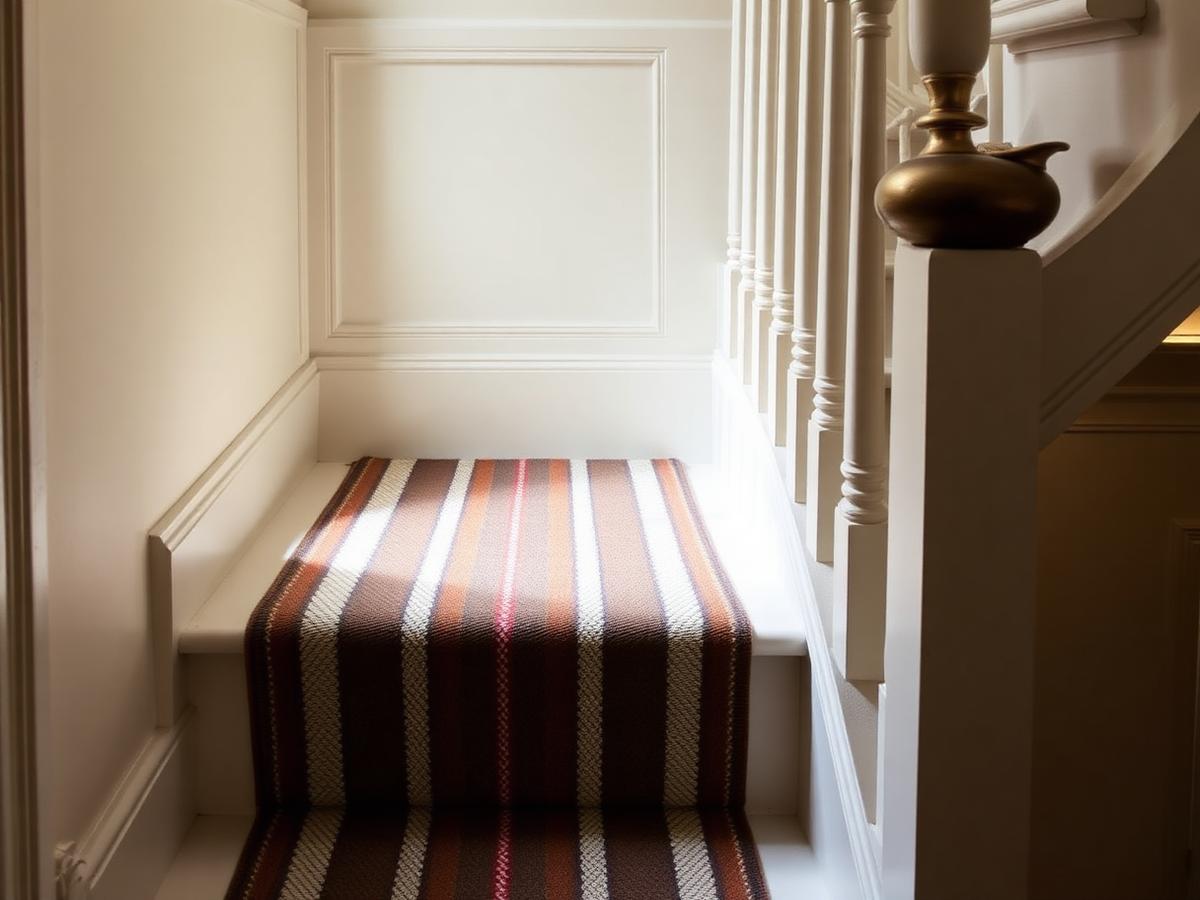
What a stair runner is, and why choose one
A stair runner leaves a border of painted, stained or natural timber visible at each edge of the stair, rather than covering the tread edge to edge as full stair carpet does. It is a popular choice where the staircase itself, or the joinery around it, is worth showing off, and it tends to suit period and character properties particularly well, though it works equally in contemporary homes.
Choosing the right width
Runner width is typically expressed as a proportion of the total tread width, commonly leaving a border of a few inches at each side, though the exact proportion depends on the staircase and the look wanted. A narrower runner emphasises the staircase joinery, while a wider one reads closer to full stair carpet with just a hint of timber showing.
Material choice for stair runners
Wool and wool-rich blends are the most common choice for stair runners, offering durability alongside a natural, tactile appearance. Sisal and other natural fibres bring texture and a more rustic character but need careful consideration on stairs, since some natural fibres can be less forgiving underfoot and less resistant to moisture than wool.
- Wool or wool-blend — durable, comfortable, wide choice of colour and pattern
- Sisal and natural fibres — strong texture and character, generally better suited to lower-traffic stairs
- Striped or patterned runners — a classic, tailored look that also helps disguise everyday wear
Borders and edge finishing
The runner's edge can be finished in several ways, including a serged or bound edge in a contrasting or matching colour, which adds definition and a tailored, made-to-measure appearance. This detailing is a genuine opportunity for personalisation, and it is worth seeing physical samples of edge finishes before committing, since photographs rarely convey the effect accurately.
Rods, grippers and how a runner is secured
Traditional stair rods, sitting in the tread crease and visible as a decorative feature, are one method of securing a runner and suit period properties well. Alternatively, a runner can be fitted using grippers and underlay in the same way as full stair carpet, giving a cleaner, more contemporary appearance with no visible fixings.
What careful installation involves
Fitting a runner accurately down a staircase, particularly one with winders or a curve, requires precise measuring and centring on every single tread, since even a small misalignment becomes very visible over a full flight of stairs. A well-fitted runner should sit perfectly straight, be secured firmly enough to prevent movement underfoot, and have any pattern correctly aligned tread to tread.
Frequently asked questions
- Is sisal suitable for stairs?
- Sisal can be used on stairs and brings a distinctive natural texture, but it is generally better suited to lower-traffic staircases, since it can be less forgiving underfoot than wool and is more sensitive to moisture and staining. Where sisal is preferred for its look, binding it with a wool or wool-blend border for the tread nosing is sometimes used as a practical compromise.
- Can a stair runner be fitted on a curved or winding staircase?
- Yes, a bespoke runner can be fitted to a curved or winding staircase, though it requires more careful measuring and pattern matching than a straight flight, since each winder tread has a different shape. This is one of the more technically demanding aspects of stair runner installation and benefits from an experienced fitter surveying the staircase in person.
- How wide should a stair runner be?
- There is no universal rule, since the right width depends on the staircase's total tread width, the joinery either side, and the look wanted. A common approach is to leave a consistent border of a few inches of exposed timber at each edge, but this should be assessed against your specific staircase rather than fixed to a standard figure.
- Do stair runners need a special underlay?
- Stair runners benefit from a dedicated stair underlay or gripper felt, which is thinner and firmer than typical room underlay, helping the runner stay taut and reducing the risk of movement or premature wear at the tread edge. Using a general-purpose underlay not designed for stairs can shorten the runner's life and affect how securely it sits.
Written by The Floor & Form studio team, reviewed by Floor & Form installation team. Published 2026-08-04, last updated 2026-08-04.
Consultation
Planning a flooring project?
Tell us about your property, ideas and timescale. We will help you explore the most suitable materials and arrange the next step.