
Wood
Engineered wood versus solid wood flooring
Engineered wood is constructed from a real timber veneer bonded to layers of plywood or high-density fibreboard, giving it greater dimensional stability than solid wood, particularly with underfloor heating or in rooms prone to humidity changes. Solid wood is timber through and through, with a longer potential lifespan through refinishing but less tolerance for moisture and heat fluctuation.
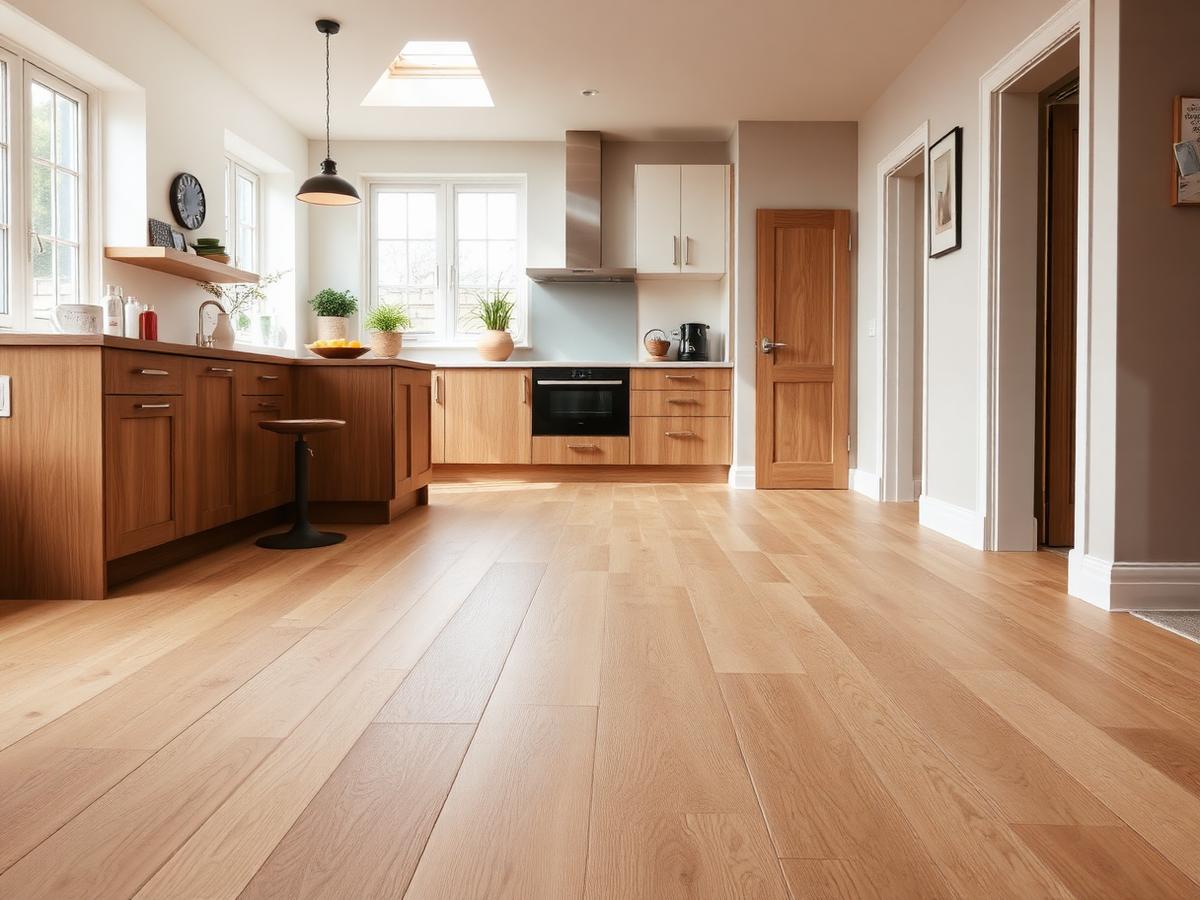
How the two are actually constructed
Solid wood flooring is milled from a single piece of timber, top to bottom, and has been used for centuries because it is exactly what it appears to be. Engineered wood flooring, by contrast, consists of a genuine hardwood wear layer bonded over several layers of plywood or high-density fibreboard, arranged in a cross-grain construction that significantly improves stability.
Stability and underfloor heating
The cross-grain construction of engineered wood makes it considerably more resistant to the expansion, contraction and cupping that timber naturally undergoes with changes in temperature and humidity. This is why engineered wood is generally the preferred choice over underfloor heating, and why it tends to perform better in wide, open-plan spaces where solid wood might otherwise be prone to movement.
Wear layer and refinishing
Engineered wood's wear layer, the depth of genuine timber on top of its structural base, determines how many times it can be sanded and refinished over its lifetime, and this varies significantly between products. Solid wood, being timber throughout, can typically be sanded and refinished more times over a longer lifespan, provided the floor is not compromised by excessive moisture exposure.
Appearance and feel underfoot
Once fitted, a quality engineered wood floor is very difficult to distinguish visually from solid wood, since the visible surface is genuine timber in both cases. Any perceptible difference tends to come down to board construction, finish and installation method rather than the fact of being engineered or solid.
Cost and where each performs best
Pricing varies considerably by species, grade and finish in both categories, so it is not accurate to say one is universally more affordable than the other. In practice, engineered wood tends to be specified more often in modern renovations and open-plan homes due to its stability, while solid wood remains popular in period properties being restored with traditional materials.
- Choose engineered wood for underfloor heating, wide open-plan rooms, or where subfloor moisture is a known factor
- Choose solid wood where a very long refinishing lifespan matters and the room's conditions are stable
- Both require appropriate acclimatisation to the property before fitting
Fitting methods
Engineered wood can be fitted using a floating, glued or secret-nailed method depending on the subfloor and product, giving flexibility across different types of property. Solid wood is generally nailed or glued directly to the subfloor, which requires a suitable timber or ply substrate and is less commonly used over concrete slabs without additional preparation.
| Factor | Engineered wood | Solid wood |
|---|---|---|
| Underfloor heating | Generally suitable | Generally not recommended |
| Dimensional stability | High, due to cross-grain construction | Lower, more prone to movement |
| Refinishing lifespan | Depends on wear layer depth | Typically longer, timber throughout |
| Suitable subfloors | Wide range, including concrete | Usually requires timber or ply substrate |
| Typical use case | Open-plan and modern renovations | Period properties, traditional restoration |
Frequently asked questions
- Can engineered wood be fitted over underfloor heating?
- Yes, engineered wood is generally well suited to underfloor heating because its cross-grain construction resists the expansion and contraction that heat cycles can cause. It is important to choose a product specifically rated for underfloor heating and to follow the manufacturer's guidance on maximum surface temperature and commissioning the heating system gradually before and after installation.
- What causes gaps or movement in wood flooring?
- Gaps and movement typically result from changes in humidity and temperature causing timber to expand and contract, which is more pronounced in solid wood than engineered wood. Insufficient acclimatisation before fitting, an unsuitable subfloor, or a property with unusually dry heating in winter can all contribute, and the appropriate response depends on identifying the specific cause.
- How long does engineered wood flooring last?
- A well-specified engineered wood floor, properly fitted and cared for, can last several decades, though the exact lifespan depends on the wear layer depth, footfall, and how many times it is refinished over its life. This varies enough between products that it is best discussed against the specific floor being considered.
Written by The Floor & Form studio team, reviewed by Floor & Form installation team. Published 2026-08-04, last updated 2026-08-04.
More on wood
Engineered wood and underfloor heating: what to know before you specify
A forthcoming guide to specifying engineered wood over underfloor heating, covering board choice, commissioning and avoiding common pitfalls.
How long does engineered wood flooring last?
A forthcoming look at what determines the lifespan of engineered wood flooring, from wear layer depth to maintenance.
Consultation
Planning a flooring project?
Tell us about your property, ideas and timescale. We will help you explore the most suitable materials and arrange the next step.